Effective Teamwork and Career Growth: Integrating AI EPS Illustrations into Your Workflow
In any professional environment, the quality of your visual assets directly influences how clearly ideas are communicated and how efficiently teams collaborate. Whether you are a marketer building a campaign, a developer designing an app interface, or a small business owner crafting a brand identity, having a reliable collection of illustrations can save hours of work while ensuring consistency across projects. The AI EPS illustration sets available in our special collection are built exactly for that purpose. They are not just decorative elements; they are practical tools that support both effective teamwork and long-term career development.
This article walks through how these illustration files fit into real workflows, how they help teams stay aligned, and why investing in modular, editable assets can accelerate your professional growth. We focus on practical implementation, organization, and long-term value—not on vague promises or hype.
What Makes These AI EPS Illustrations a Workflow Asset
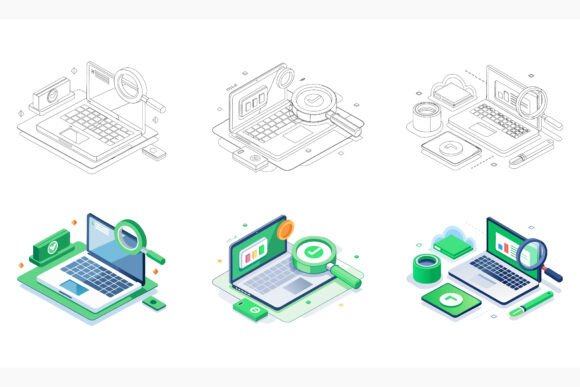
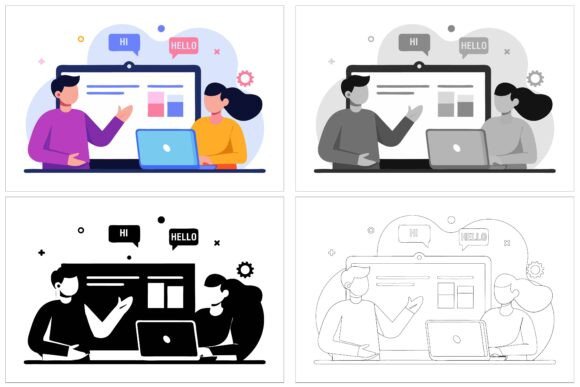
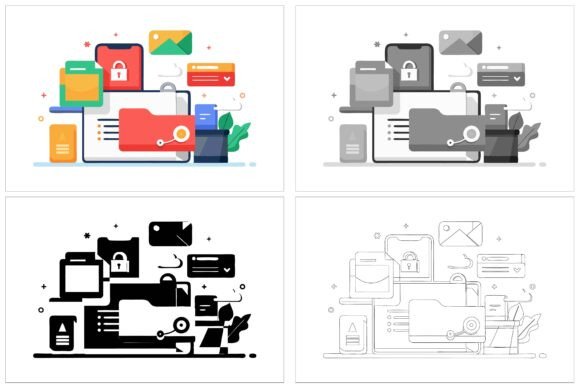
The core strength of any AI EPS illustration set lies in its adaptability. Our collection includes files in AI, EPS, and JPG formats, designed to work seamlessly on both Mac and Windows systems. This cross-platform compatibility means that whether your team uses Adobe Illustrator on a Mac or CorelDRAW on Windows, everyone can open, edit, and export the same assets without conversion issues.
More importantly, the files are organized with a clear layer structure. Layers are named logically, grouped by element, and ready for direct manipulation. When a designer needs to change a color, resize an icon, or repurpose an illustration for a different context, they can do so in seconds. This eliminates the back-and-forth that often slows down team projects. Instead of requesting a new version from a colleague, each team member can adjust the file themselves while preserving the original structure.
Consistency is another critical factor. The illustrations are created with attention to detail and uniform style across the entire set. When your team uses assets from the same collection, every presentation, infographic, web page, or app screen maintains visual harmony. This reduces the need for extra quality control and helps your brand or project look polished from the start.
Before the Project: Planning and Preparation
At the planning stage, visuals help teams align on concepts. You can quickly open an AI or EPS file to show a wireframe, a mood board element, or a placeholder icon. Because the files are editable, you can adjust colors to match a proposed palette or combine multiple illustrations to test layout ideas. This speeds up initial discussions and prevents misunderstandings. Instead of describing an abstract idea, you show a concrete visual that everyone can react to.
For freelancers and small business owners, having a ready-to-use illustration library means you can prepare a rough draft of a pitch deck or a social media template in minutes. You do not need to start from scratch or commission custom work before you have validated the concept. This efficiency directly supports career growth by allowing you to take on more projects or deliver faster results.
During the Project: Collaboration and Iteration
Once the project is underway, the real value of editable EPS files becomes clear. Team members can simultaneously work on different layers if they use compatible software, or pass files between each other with clear version control. Because the layers are neatly structured, it is easy to isolate specific elements—say, a background pattern or a character—without affecting the rest of the illustration. This is especially useful in app development, where icons and UI elements need to be exported individually and then imported into design tools like Figma or Sketch.
Color modification is straightforward. If the client requests a new brand color mid-project, you open the EPS file, select the objects, and apply the new hex code. The JPG exports serve as quick previews for non-designers who do not have vector software installed. Meanwhile, the AI files remain the master source, keeping the project flexible for later changes.
In team settings, this reduces friction. The graphic designer does not have to recreate every element; the content writer can export a simple JPG to include in a draft; the developer can use the EPS to create SVG code for responsive web graphics. When everyone can access and adapt the same source material, decisions happen faster and fewer resources are wasted.
After the Project: Archiving and Reuse
After delivering the project, you can archive the AI files as part of your asset library. Because they are vector based, they scale to any size without loss of quality. This makes them suitable for future print materials, larger displays, or downscaled versions for social media. The consistent style means you can mix illustrations from the same collection in new projects without worrying about mismatched aesthetics.
Career growth often comes from building a portfolio of past work. When you have used these illustrations in multiple professional projects, each one adds to your portfolio’s visual appeal. Potential employers or clients see that you can produce cohesive, high-quality visuals efficiently. The illustrations themselves become part of your professional brand. By reusing them in different contexts, you demonstrate resourcefulness and attention to detail.
How These Assets Interact with Other Tools and Resources
AI EPS files are designed to integrate with a wide range of creative and productivity platforms. For example, after editing an illustration in Adobe Illustrator, you can export it as a PNG for use in Canva, PowerPoint, or Google Slides. The EPS format can be opened in CorelDRAW, Affinity Designer, and many free alternatives like Inkscape, ensuring compatibility even in budget-conscious workflows.
For team collaboration, platforms like Dropbox, Google Drive, or cloud-based design libraries can host these files. Because the layer structure remains intact, multiple team members can download and edit the same file locally or use shared folders. For larger teams, you might store the master AI files on a shared network drive with clear naming conventions, such as “Hero-Illustration_v1.ai” and update them as the project evolves.
Infographics, for example, benefit enormously from reusable icons. With this collection, you can pull individual icons into a tool like Piktochart or Visme, resize them without losing clarity, and maintain a consistent look throughout the graphic. The same icons can then be used in a landing page design or an email template, unifying your visual communication across channels.
For mobile app developers, the EPS files can be converted into SVG sprites using built-in export functions. This keeps your UI scalable and lightweight. The JPG versions serve as placeholders during wireframing before the final vector assets are integrated. This layered approach saves development time and reduces the number of design handoff meetings.
Organize Your Library Before You Start
Create a folder structure that mirrors your team’s workflow. For example, group illustrations by theme (e.g., “Business”, “Technology”, “Education”) or by use case (e.g., “Icons”, “Hero Images”, “Backgrounds”). Rename files to include a version number and a brief description. This upfront effort pays off every time someone needs to locate an asset quickly.
Establish a Color Palette and Stick to It
Before editing any illustration, agree on a shared color palette with your team. Because the files are editable, you can apply global color changes across multiple illustrations at once using Illustrator’s Recolor Artwork feature. This ensures that every member works from the same color reference, reducing guesswork and rework later.
Use Layers to Separate Concerns
Leverage the organized layer structure to assign different parts of an illustration to different team members. For instance, one person can work on the background layer while another handles the foreground elements. This is particularly useful in educational publishing, where an illustrator might need to swap out a character’s clothing for cultural sensitivity, while the layout designer simultaneously adjusts the composition.
Keep JPGs as Quick References
When collaborating with non-designers, share JPG versions for feedback early. They load instantly, are easy to annotate with tools like Preview or built-in markup, and reduce the risk of someone accidentally editing the master AI file. Only finalize the vector file once approvals are locked.
Plan for Long-Term Reuse
After completing a project, clean up the AI files by removing unused layers and locking the final elements. Store them alongside project notes or style guides. When a similar project arises months later, you can open the archived file, adjust a few colors, and have a relevant illustration in minutes instead of hours.
Quality Control and Consistency Across Outputs
One of the main reasons teams seek out professional illustration sets is to maintain a high level of consistency without spending excessive time on manual adjustments. Our AI EPS collections are built with uniform stroke widths, balanced proportions, and a coherent visual language. When you use them across print, web, app, and infographic projects, the end products look like they belong to the same family.
To ensure this consistency, it helps to document your settings. For web use, export at 72 DPI with RGB color mode. For print, switch to 300 DPI and CMYK. Because the source file is vector, these conversions are straightforward and do not degrade quality. Always test a sample export on the actual medium before finalizing the whole project. This small step catches any issues with color shifts or scaling before they affect the deliverables.
Career Growth Through Efficiency and Professional Portfolio Building
For freelancers, entrepreneurs, and job-seeking creators, time is your most limited resource. Every hour saved on routine design tasks can be redirected to higher-value activities: client communication, strategic thinking, skill development, or networking. By using ready-to-edit illustration sets, you accelerate your workflow without sacrificing quality. Over weeks and months, this compounds into faster turnaround times, happier clients, and more opportunities to take on challenging projects.
Moreover, a well-organized personal library of professional assets becomes a competitive advantage. When you can show a client a mockup in a fraction of the usual time, you demonstrate reliability and expertise. The ability to modify colors, swap elements, and tailor assets to a brand’s identity shows that you understand their needs and can execute quickly. These are the qualities that lead to referrals, repeat contracts, and career advancement.
Career growth is not only about climbing a corporate ladder. It is also about increasing your capacity to produce quality work consistently. With a solid foundation of reusable, high-quality illustrations, you free up mental energy to focus on the creative and strategic aspects of your role. Whether you are a solo creator or part of a larger team, integrating AI EPS assets into your daily workflow supports both effective collaboration and personal development.
The time to start building your visual toolkit is now. By choosing an illustration set that is organized, editable, and compatible with your existing software, you set yourself up for smoother teamwork and sustained professional progress.